
Notes and Safety
To ensure your trip goes smoothly
Rules and Guidelines
Notes and Safety
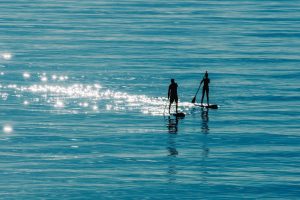
Get yourself and your SUP ready
- After you've taken the SUP and paddle out of the compartment, remove the paddle from the holder.
- Adjust the paddle to your height—it should be about 20 cm longer than you are.
- Slide the fin into the guide in the direction of the arrow until it clicks into place.
- Attach the leash to your ankle before you go into the water.
- Carry the board by the handle and be careful. Don't drag it across the sand or ground. Be careful not to trip over the safety leash.
- Wearing a life jacket and weather-appropriate clothing, such as a wetsuit or UV-protective clothing, helps protect your health.
- For longer rides, be sure to bring drinks, a snack, and sunscreen.

Before you get in the water
- Please follow the information and warnings at the surf spot
- Get to know your surf spot. This includes the nature of the seabed, such as sand, rocks, or coral
- Sandbars, currents, and tidal channels (priels)
Currents and changes in current direction due to tidal influences - Lifeguard stations and emergency numbers
- Wind speed and direction. Offshore winds are dangerous.
- Are there other surfers in the water, and what are they doing?
- Is the surf dangerous to people and equipment?
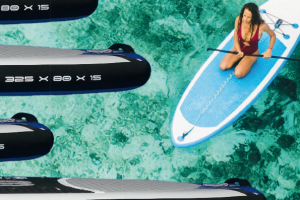
When pulling away – Skill and fitness
- After you've taken the SUP and paddle out of the compartment, remove the paddle from the holder.
- Adjust the paddle to your height—it should be about 20 cm longer than you are.
- Slide the fin into the guide in the direction of the arrow until it clicks into place.
- Attach the leash to your ankle before you go into the water.
- Carry the board by the handle and be careful. Don't drag it across the sand or ground. Be careful not to trip over the safety leash.
- Wearing a life jacket and weather-appropriate clothing, such as a wetsuit or UV-protective clothing, helps protect your health.
- For longer rides, be sure to bring drinks, a snack, and sunscreen.

In the water and by the sea
- After you've taken the SUP and paddle out of the compartment, remove the paddle from the holder.
- Adjust the paddle to your height—it should be about 20 cm longer than you are.
- Slide the fin into the guide in the direction of the arrow until it clicks into place.
- Attach the leash to your ankle before you go into the water.
- Carry the board by the handle and be careful. Don't drag it across the sand or ground. Be careful not to trip over the safety leash.
- Wearing a life jacket and weather-appropriate clothing, such as a wetsuit or UV-protective clothing, helps protect your health.
- For longer rides, be sure to bring drinks, a snack, and sunscreen.

Back on land
- Lift the SUP out of the water using the handle and place it on the sand with the fin still facing up.
- If you want to close the rental, remove the fin by unlocking it and sliding it toward the open side of the guide.
- Attach the paddle to the designated spot and slide it into the compartment with the tip facing forward and the top side up until it reaches the end.
- Close the door firmly until it clicks into place.

What to do in an emergency
- Never leave the board – stay calm – conserve your energy!
- If you encounter problems with the current, paddle out of the current at a 45-degree angle to the shore and try to reach a break zone. There is no continuous current toward the sea in that area, and the breaking waves will help you get back to shore. Never try to paddle against the current!
- If you need help, send a distress signal right away: If you’re sitting on your board, slowly raise and lower your outstretched arms from your sides to above your head. If you’re swimming in the water, raise one arm straight up.